Pressure & Point Therapy
Korean Hand Therapy
Korean Hand Therapy treats the whole body through precise points on the hands alone, using gentle pressure and micro-stimulation to relieve pain, settle stress, and restore healthy balance.
- Session length
- 30–45 min
- Typical course
- 6–10 typical
- Intensity
- Gentle
- Suitable for
- Nearly everyone — ideal for those who want needle-free, clothing-on care, including children and older adults
How it helps
- Relieves pain in distant parts of the body through the hands alone
- Calms stress and supports better sleep
- Improves circulation and energy flow
- Supports digestion and general immunity
- Completely non-invasive — no needles, no undressing
- Easy to learn simple points for self-care at home
Often chosen for
Tap a condition to see the full condition guide.
What is Korean Hand Therapy?
Korean Hand Therapy — also known as Koryo Hand Therapy — is a healing system developed in Korea in the 1970s by Dr. Tae Woo Yoo. Its central discovery is that the hand contains a complete, finely detailed map of the body: the middle finger corresponds to the head and spine, the index and ring fingers to the arms, the thumb and little finger to the legs, and the palm to the chest and abdomen.
That means the entire body can be assessed and treated through the hands alone. There are no needles in a KiLiK session, no undressing, and nothing invasive — just precise, gentle stimulation of very small points.
How it works
When a part of the body is strained or out of balance, its corresponding point on the hand becomes unusually tender. Your therapist probes the mapped zone with a small blunt instrument to find these reactive points, then stimulates them with steady pressure or fine micro-tools. The stimulation travels through the nervous system to the related area, helping to relax tight tissue, improve circulation, and settle overactive stress responses. The system also describes micro-meridians on the hand that echo the body's main energy channels, so treatment rebalances energy flow as well.
What a session feels like
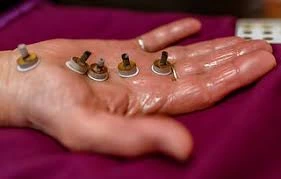
Sessions are quiet, seated, and genuinely pleasant. Expect a moment of sharp tenderness when a reactive point is first located — practitioners consider this the point announcing itself — followed by light, rhythmic stimulation that most people find deeply calming. Small metal pellets may be taped over the most important points at the end, quietly continuing the work for hours afterwards. Because only the hands are treated, it is one of the easiest therapies to receive, whatever your age or mobility.
What a session looks like
- 1
Reading the hand map
Korean Hand Therapy maps the entire body onto the hand — the middle finger represents the head and spine, the palm the torso. Your therapist locates the zones that match your condition.
- 2
Finding the reactive points
Using a small blunt probe, the therapist presses lightly across the mapped zone. Points that feel sharply tender are the reactive points connected to the area needing care.
- 3
Gentle stimulation
Each reactive point is stimulated with steady pressure or fine micro-tools. The work is precise and light — most of the session feels like a careful, focused hand massage.
- 4
Reinforcing between sessions
Tiny pellets or press-discs may be taped over key points so mild stimulation continues after you leave, helping results build from session to session.
Korean Hand Therapy — common questions
How can working only on my hands affect my whole body?+−
Korean Hand Therapy uses a detailed map in which every organ and joint has a matching point on the hand. Stimulating a point sends a regulating signal through the nervous system to its related area, easing tension and supporting normal function there.
Is Korean Hand Therapy the same as Sujok?+−
They are close relatives. Both are Korean systems that treat the body through the hands, but Korean Hand Therapy (Koryo Hand Therapy) uses its own finely detailed map and micro-meridian system. Your therapist may draw on both.
Will I feel anything during the session?+−
Reactive points often feel distinctly tender for a moment when found — a useful sign the right spot has been located. The stimulation itself is light, and most people find the session calming, often leaving with warmer, looser hands and a quieter mind.
Related therapies
Pressure & Point Therapy
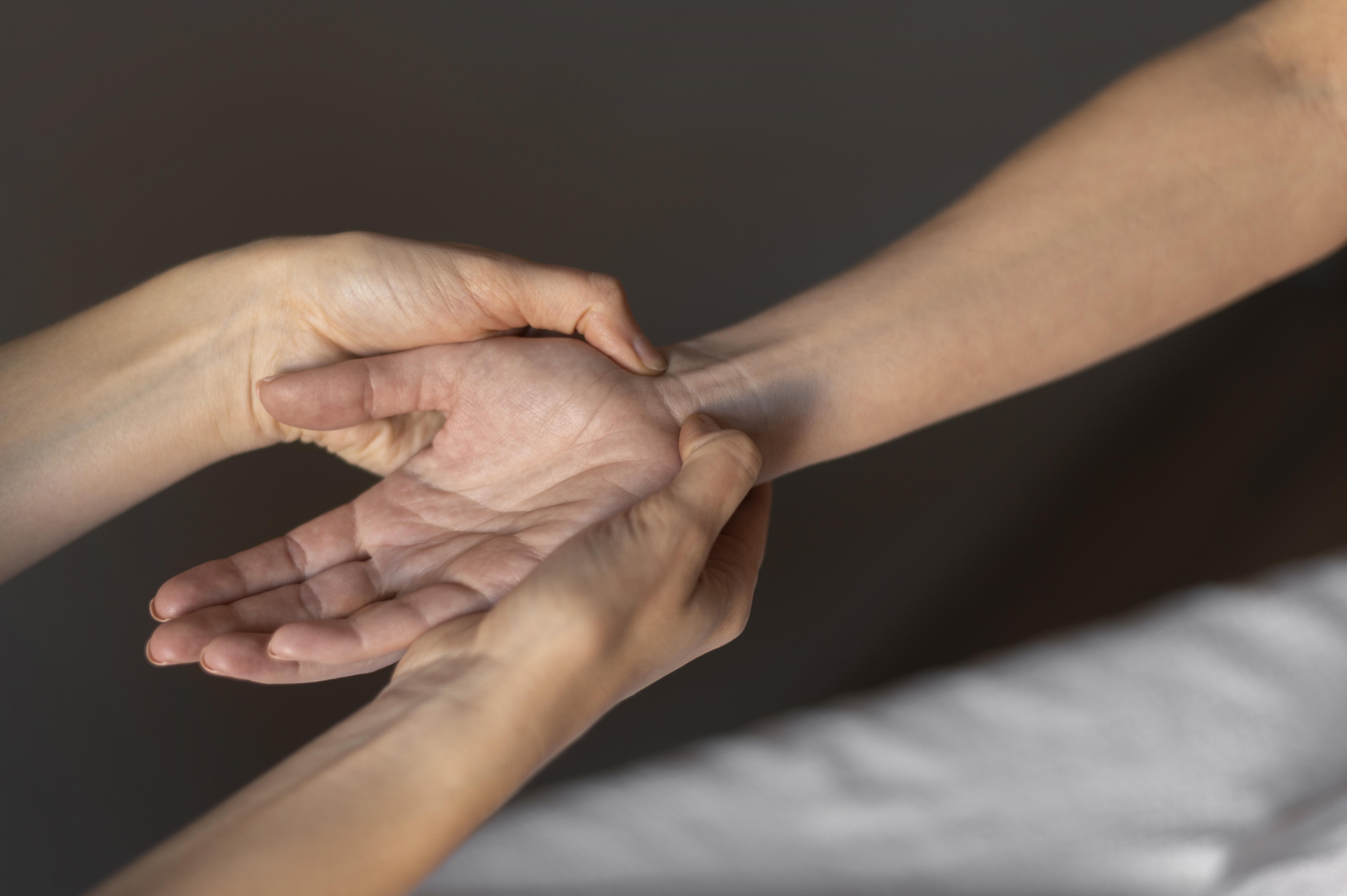
Sujok Therapy
Sujok Therapy treats the whole body through the hands and feet, stimulating tiny correspondence points with gentle pressure, seeds, or magnets to ease pain and restore natural balance.
Explore
Pressure & Point Therapy
Acupressure
Acupressure uses firm, targeted finger pressure on specific points of the body to ease pain, calm stress, and restore healthy energy flow — the benefits of acupuncture, without needles.
Explore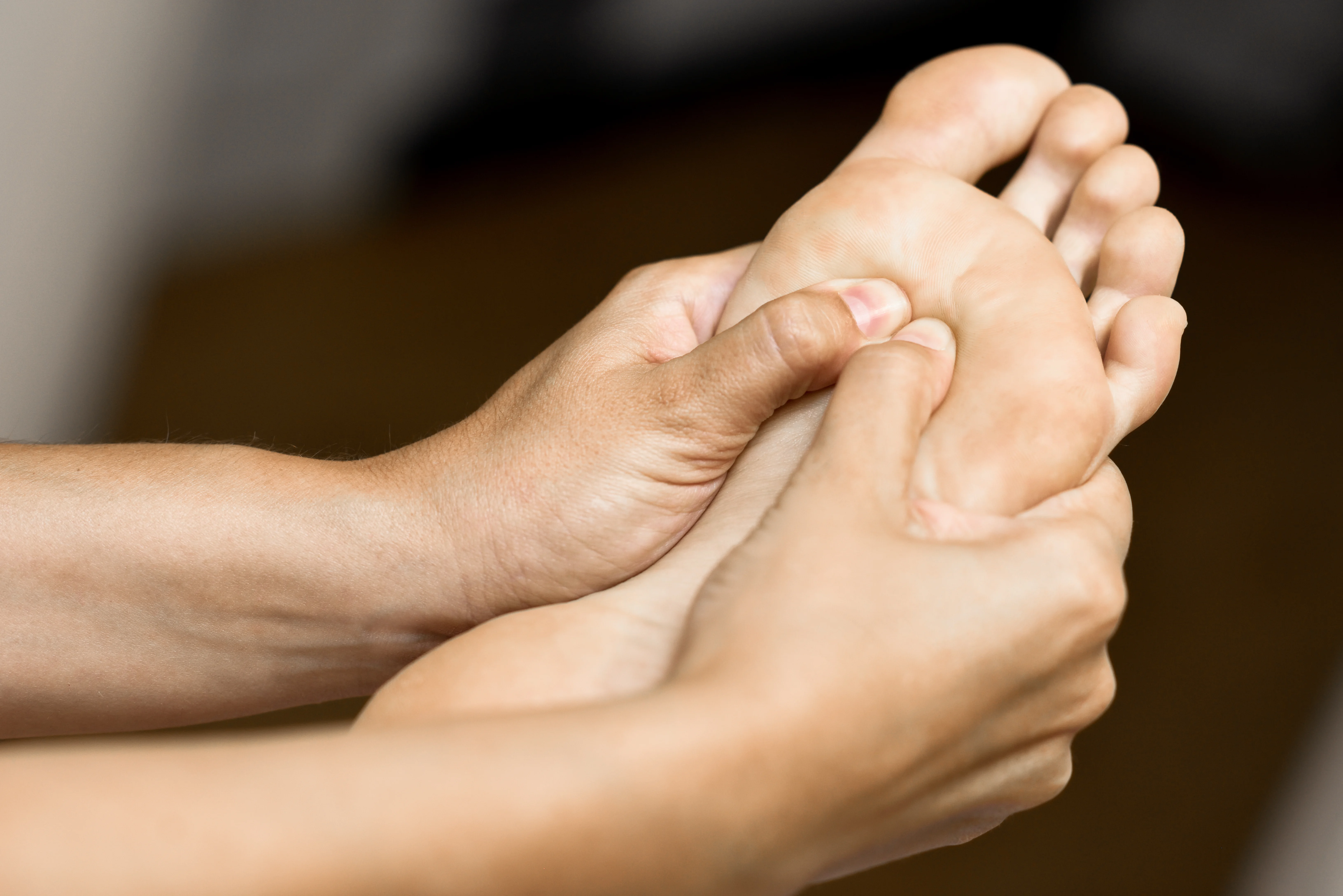
Pressure & Point Therapy
Reflexology
Reflexology applies precise pressure to reflex zones on the feet and hands that correspond to your internal organs, encouraging relaxation, healthy circulation, and balance throughout the whole body.
ExploreExperience Korean Hand Therapy at Thangajam Munril
Sessions are held at Thangajam Munril, our multidisciplinary centre in Dindigul, conducted by ALMAYA Coz Raja.