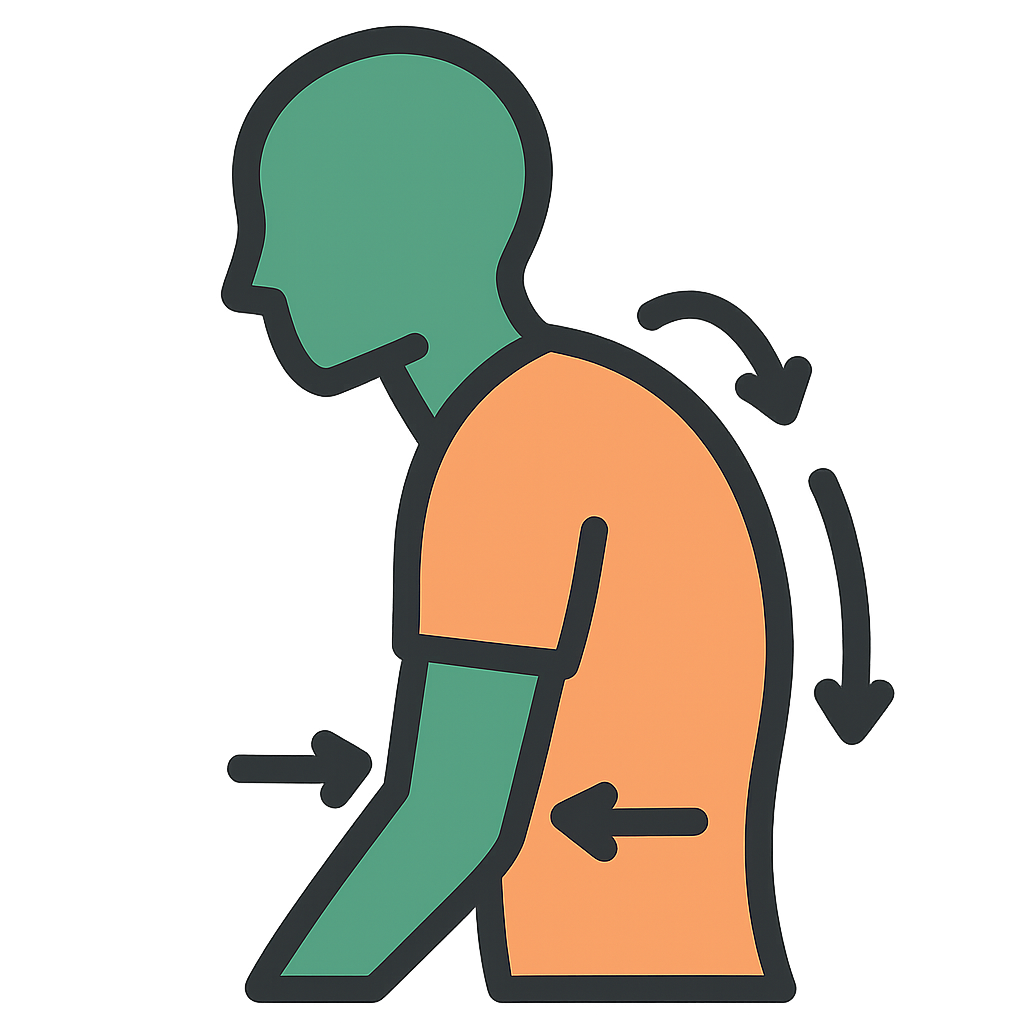
Understanding posture imbalance
Posture problems are rarely about laziness — they are patterns the body learns. Hours of sitting teach the hip flexors to shorten, screens teach the head to drift forward, and a habitually loaded shoulder teaches one side of the back to overwork. Muscle by muscle, the body settles into a lopsided arrangement, and joints start bearing weight at angles they weren't designed for.
That is why posture imbalance produces such a wandering trail of symptoms: neck ache one month, lower back stiffness the next, and tiredness from simply holding yourself upright. Correcting it means addressing both the structure and the habits that shaped it.
How our therapies help
Chiropractic care forms the structural backbone of the plan, using precise, gentle adjustments to restore proper alignment to the spine and pelvis so joints can move and load evenly again. Zone therapy complements this by working reflex areas connected to the muscles and organs under strain, easing the compensatory tension that builds when the body has been off-balance for a long time.
Chinese Meridian therapy adds a whole-body dimension, working along the energy pathways that run the length of the spine and limbs to release the deep, one-sided tightness that keeps pulling you back into old patterns. Across the course, your therapist also coaches you on sitting, standing, and daily habits — so the alignment achieved on the table becomes the alignment you carry through your day.
Questions we are asked
How long does it take to correct posture?+−
Alignment often improves visibly within the first few sessions, but posture is a habit as much as a structure. A typical course of 6–10 sessions, paired with the simple daily exercises we teach you, is what makes the change stick.
Is chiropractic adjustment safe and does it hurt?+−
Adjustments are quick, controlled, and generally painless — you may hear a harmless click as a joint releases. Your therapist screens your history first and only uses techniques suited to your body.
When should I see a doctor?+−
If a postural change appeared suddenly, follows an injury, is worsening quickly, or comes with numbness, weakness, or night pain, see a physician for assessment first. Structural conditions like scoliosis also deserve a medical opinion alongside supportive therapy.